The Catering Industry’s Best-Kept Secret: Why Top-Tier Events Are Breaking Up with Traditional Cloth Linens
https://simulinen.com/collections/simulinen-premium-pocket-dinner-napkin
Let’s set the scene. It’s a Saturday night in 2026. You’re catering a high-stakes wedding at a vineyard. The lighting is golden hour perfection, the hors d'oeuvres are exquisitely plated, and the champagne is flowing. The vibe is pure luxury.
Then, a guest grabs a bacon-wrapped date. A little grease drips onto their fingers. They reach for a cocktail napkin.
In that split second, the entire illusion of luxury hangs in the balance.
If they grab a thin, flimsy, standard paper napkin that instantly disintegrates into a soggy ball of pulp, the premium experience takes a hit. It feels cheap. But if they grab something substantial—something soft, thick, and absorbent that feels like fabric against their skin—the luxury illusion is maintained.
For years, the industry standard for "high-end" was exclusively woven cotton or linen cloth. But ask any seasoned catering manager about the reality of cloth linens, and you’ll hear a collective groan. The laundry bills. The shrinkage. The inevitable red wine and lipstick stains that render expensive inventory useless after one use.
Enter the unsung hero of modern, high-end catering: Airlaid napkins.
This isn't just "better paper." It’s a completely different category of tabletop textile that has quietly taken over top-tier events. Here is the relatable truth about why luxury catering companies prefer linen-feel Airlaid napkins over the real thing.
What Is Airlaid, Anyway? (The Non-Boring Science Part)
If standard paper napkins are made by pressing wet pulp together, Airlaid is the high-tech cousin.
Airlaid is a "non-woven" fabric. Instead of water, air is used to carry and form the fluff pulp fibers into a dense structure. The result is a material that is incredibly strong—even when wet—highly absorbent, and possess a thickness and softness that mimics real textile linen almost perfectly.
It doesn’t crinkle like paper; it drapes like fabric. And that distinction changes everything.
Reason 1: The Sensory Experience (The "Is This Real?" Factor)
Catering is theater, and every touchpoint matters. When a guest places an Airlaid dinner napkin on their lap, it has the weight and substance of cloth.
For cocktail hour, this is even more critical. A standard 2-ply beverage napkin cannot handle the condensation from a rocks glass and the sauce from a mini meatball. It turns into mush. An Airlaid cocktail napkin handles both with grace, keeping the guest's hands clean and dry. It elevates the passed appetizer experience from "snack" to "culinary moment."
Reason 2: The "Red Lipstick Tax" and Operational Sanity
Let’s talk business. The operational backend of using real cloth linens is a nightmare.
Every caterer knows the pain of sending 500 pristine white linen napkins out to an event and getting 450 back. Of those returned, 50 are permanently stained with indelible red lipstick, curry sauce, or Cabernet. That’s expensive inventory going straight into the rag pile.
Furthermore, professional laundry services are expensive and energy-intensive. By switching to premium disposable Airlaid napkins, catering companies eliminate laundry logistics entirely. They guarantee a perfect, crisp, unstained product for every single guest, every single time. The cost per unit is fixed, predictable, and often lower than the wash/dry/press/replace cycle of real cloth.
Reason 3: Hygiene and the Post-Pandemic Mindset
While we have moved past the height of pandemic protocols, there is a lasting awareness regarding hygiene in group dining settings.
There is a subtle, subconscious comfort for guests in knowing that the napkin touching their lips is fresh, unused, and hasn't been through an industrial washing machine hundreds of times before landing on their plate. Single-use, linen-feel napkins offer the best of both worlds: the luxury texture of cloth with the guaranteed hygiene of a disposable.
Reason 4: Folding and Versatility
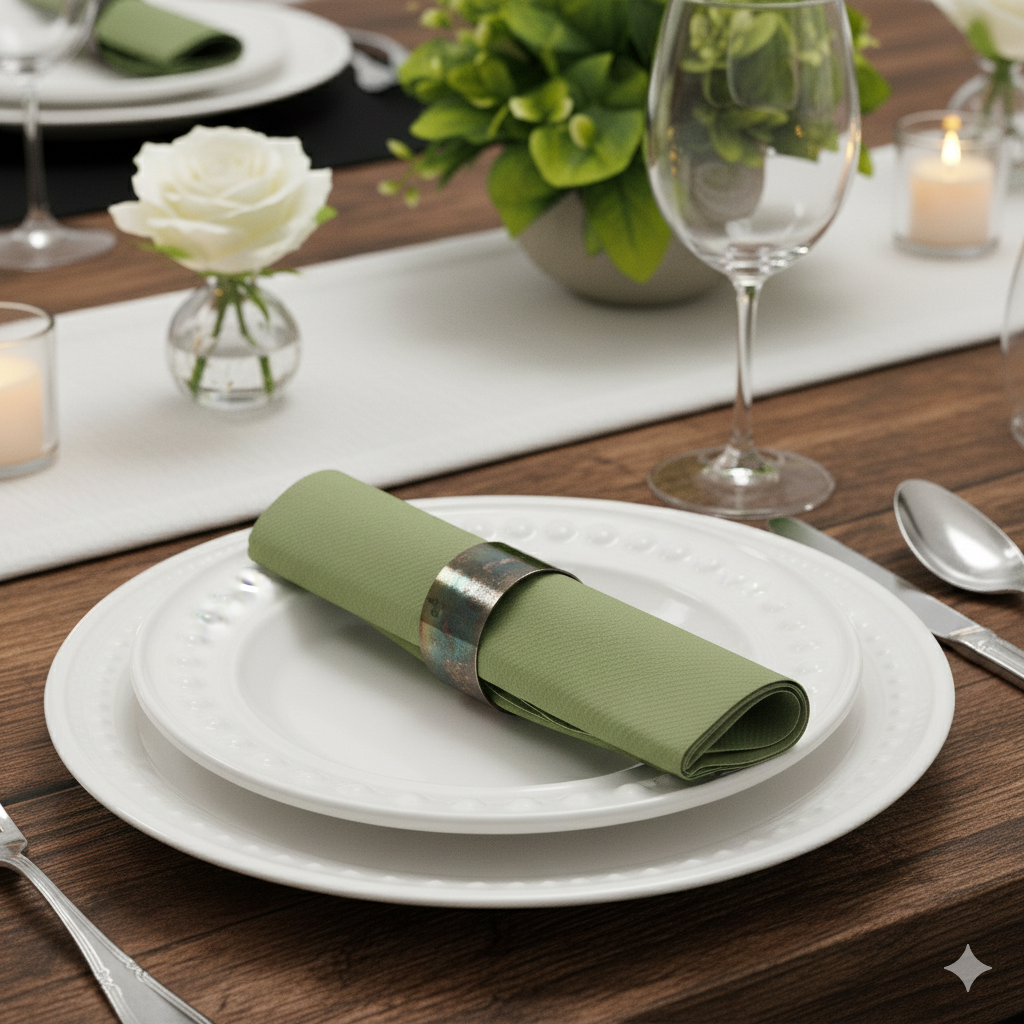
Because Airlaid has a textile-like structure, it holds a fold beautifully. Whether you need a crisp pocket fold for silverware or a simple, elegant rectangle at a place setting, Airlaid obeys. It doesn't have the "spring-back" memory of cheap paper. It sits where you tell it to sit, looking refined and intentional.
The Final Verdict: The Smart Luxury Choice
High-end catering isn't about clinging to old traditions; it’s about providing the best possible guest experience while running a smart business. Airlaid napkins have shed their "alternative" status to become the preferred choice for savvy event professionals. They deliver the luxury feel guests expect, without the operational headaches caterers dread.
FAQ: Airlaid Napkins in Catering
Q: Are linen-feel napkins just expensive paper towels?
A: No. Airlaid technology creates a non-woven fabric structure that is significantly denser, softer, and more durable when wet than standard paper products. They are designed specifically to mimic the feel of woven textiles.
Q: Why do caterers choose disposable napkins over cloth?
A: Caterers prefer premium disposables like Airlaid to eliminate expensive laundry costs, avoid permanent staining issues (like red wine or lipstick) that ruin cloth inventory, and ensure a consistently hygienic, perfect product for every guest.
Q: Can Airlaid napkins be used for formal dinners?
A: Absolutely. Dinner-sized Airlaid napkins are standard in many high-end banquets and weddings because they offer the weight, drape, and absorbency required for a full meal, matching the elegance of the event.
Q: Are Airlaid napkins eco-friendly?
A: Many manufacturers offer Airlaid napkins made from FSC-certified sustainable forests, and because they are often compostable in commercial facilities, they can be a more sustainable choice than the massive water and energy consumption required by industrial laundering of cloth linens.